FIELD NOTE · ROUTE 8
The Los Angeles Art Market in 2026: Galleries, Fairs and the Advisor Layer
A working map of the Los Angeles contemporary art market: the gallery districts, the fair calendar, the collector base and the advisors who operate in the city.
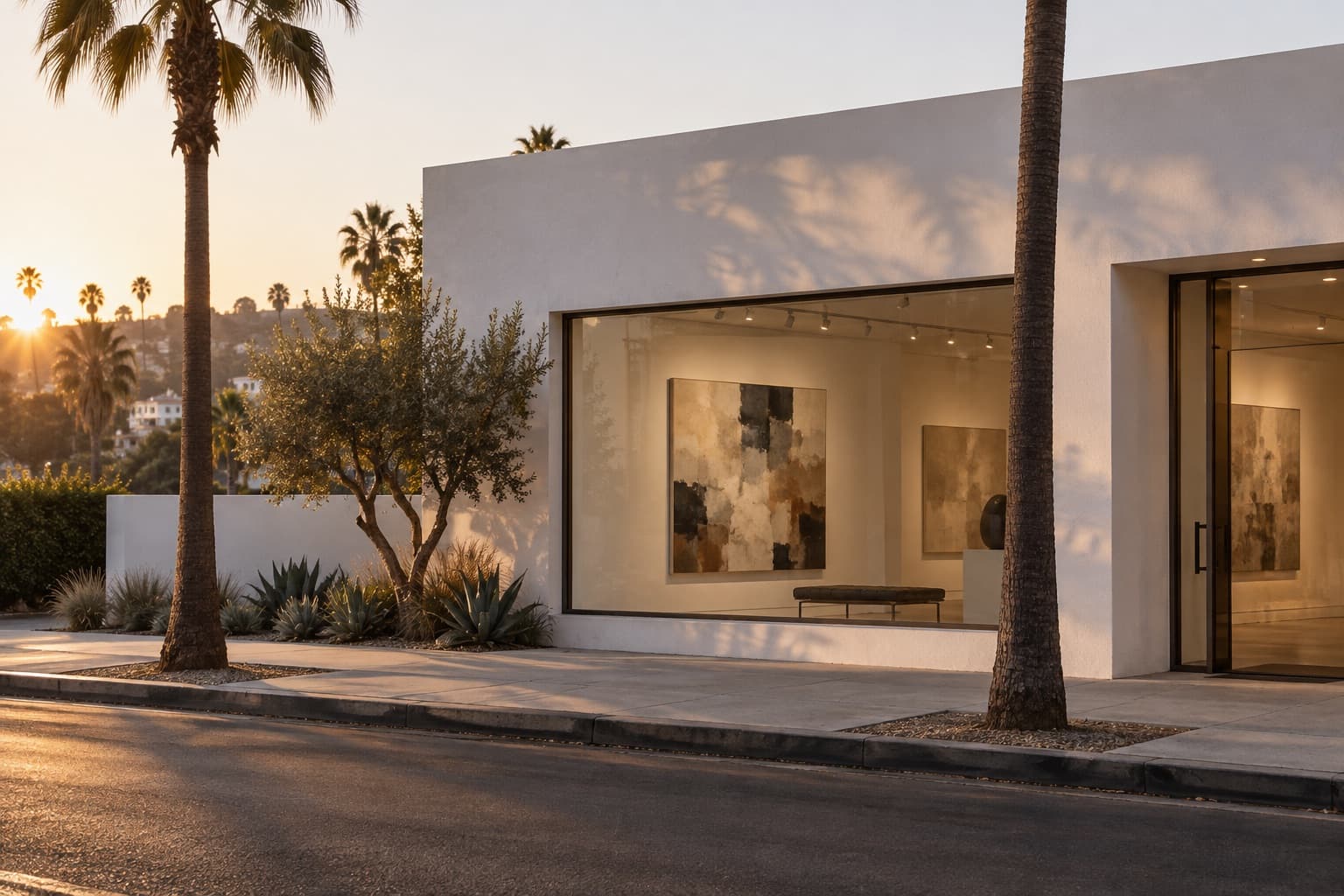
Los Angeles is now a co-equal secondary centre for contemporary collecting in the United States, with a market structure that has matured over the last decade.
The city's gallery districts are geographically dispersed, which shapes both how collectors buy and how advisors operate.
Frieze Los Angeles, Felix and the spring gallery walks have moved the LA market from a single fair to a year-round programme.
LA's advisor base is unusually broad for its size and includes practices that operate across the city, the Westside and the wider Pacific Rim.
CHECKPOINT 01 ? 118.2437? W
The shape of the market
Los Angeles is the second-largest contemporary art market in the United States by transaction value, after New York. The 2026 Art Basel and UBS Global Art Market Report places the U.S. market at the centre of global dealer sales, with Los Angeles contributing a meaningful share of the West Coast total. The city's market is broad: it covers emerging and established artists, primary and secondary market, private sales, gallery exhibitions, auctions, and a growing set of programmes tied to new-construction luxury developments.
Unlike New York, the Los Angeles market is geographically dispersed. Galleries are spread across the city's westside, downtown, mid-city, the San Fernando Valley, Pasadena, the Inland Empire and the Orange County coast. The dispersion shapes how the market operates: collectors and advisors drive, fair calendars are local rather than neighbourhood, and relationships are personal rather than transactional.
CHECKPOINT 02 ? 34.0522? N
Gallery districts
The primary gallery districts in Los Angeles are concentrated in a few areas. Downtown Los Angeles hosts a cluster of contemporary galleries around the Arts District and the surrounding blocks, with both primary-market programmes and secondary-market private sale work. West Hollywood and the area around Melrose host a broader mix of contemporary, post-war and modern programmes. Culver City and the surrounding area host a meaningful share of the city's blue-chip contemporary work, particularly in larger spaces that accommodate significant installations. Beverly Hills and the Westside host a smaller set of high-end programmes, with a strong focus on private sales to local collectors.
Secondary clusters exist in Pasadena, which has a long-standing gallery community, and in the beach cities, where a number of newer programmes have opened. The dispersion means that an advisor in Los Angeles typically knows the full map of the city and operates across all of it, rather than being anchored to a single district.
CHECKPOINT 03 ? 118.2437? W
Fairs and the calendar
Frieze Los Angeles, held in February at the Hollywood Park development in Inglewood, is the city's largest contemporary fair. The fair moved to the new venue in 2023 and has grown steadily since. Felix, founded by Dean Valentine and Craig Kozen, is a smaller contemporary fair held in the Hollywood Park development in July. The spring gallery walks, held in May, are a citywide programme of openings and events that have become a major part of the calendar. The Armory Show, while held in New York, is also relevant to the LA market because of the number of LA-based collectors who attend.
Beyond the major fairs, Los Angeles has a year-round programme of gallery openings, museum exhibitions, foundation events and benefit auctions that keep the market active even outside the fair windows. The Art Basel and UBS report observes that collectors and advisors in Los Angeles typically engage with the market on a rolling basis, with the major fairs serving as accelerants rather than focal points.
CHECKPOINT 04 ? 34.0522? N
The collector base
The Los Angeles collector base is unusually broad for the size of the city. It includes long-standing contemporary collectors across Beverly Hills, Bel Air, Holmby Hills, Brentwood, Pacific Palisades and Malibu; a younger generation of design-literate collectors in the Hollywood Hills, Silver Lake, Echo Park and Los Feliz; a growing presence of collectors in downtown Los Angeles and the Arts District; and a meaningful number of collectors in the Inland Empire and Orange County, who often work with LA-based advisors for their primary collecting activity.
The collector base also includes a significant share of collectors from outside the region, particularly from the Pacific Rim, the Middle East and the East Coast, who maintain a Los Angeles presence for part of the year and rely on local advisors to manage their collecting activity during their stays. The advisor's role for these collectors is to act as a local presence and to coordinate with the collector's home-base advisors.
CHECKPOINT 05 ? 118.2437? W
The advisor layer
The Los Angeles advisor base includes long-standing independent practices, gallery-affiliated advisors, and a growing number of multi-person advisory firms with formal due-diligence, collection-management and installation capability. The advisor base is unusually broad for the size of the market, in part because the geographic dispersion of the market requires advisors who can operate across districts, and in part because the collector base expects a high level of personal service.
Notable practices include Annie Wharton Art Consulting, Schwartzman & Associates and Bettina Katz on the long-established side, and a number of newer entrants focused on contemporary collecting, family-office engagement and luxury real-estate development. The 2026 Art Basel and UBS report notes that the Los Angeles market has the highest share of family-office and developer engagement of any U.S. secondary market, which is reflected in the structure of the city's advisor base.
CHECKPOINT 06 ? 34.0522? N
Working with a Los Angeles advisor
A Los Angeles-based advisor is typically engaged for one of three reasons. The first is local presence: a collector with a Los Angeles residence needs a local advisor for acquisitions during the LA season. The second is geographic reach: a collector who lives outside the region needs an advisor who knows the LA market, can attend the fairs, and can manage the operational side. The third is a defined project: a collector who is building a collection, formalising a family-office programme or coordinating with a luxury development may engage an LA-based advisor for a defined engagement.
The right advisor for a given engagement is the one whose practice, fee structure and engagement model fit the engagement. The Los Angeles advisor base is broad enough to support most engagement types, and a credible advisor will be transparent about the work they do and the work they refer out.
Educational editorial content reflecting the author's professional perspective. Not legal, tax, appraisal or investment advice. No specific artwork, seller or transaction paid for inclusion.
Full policy ↗